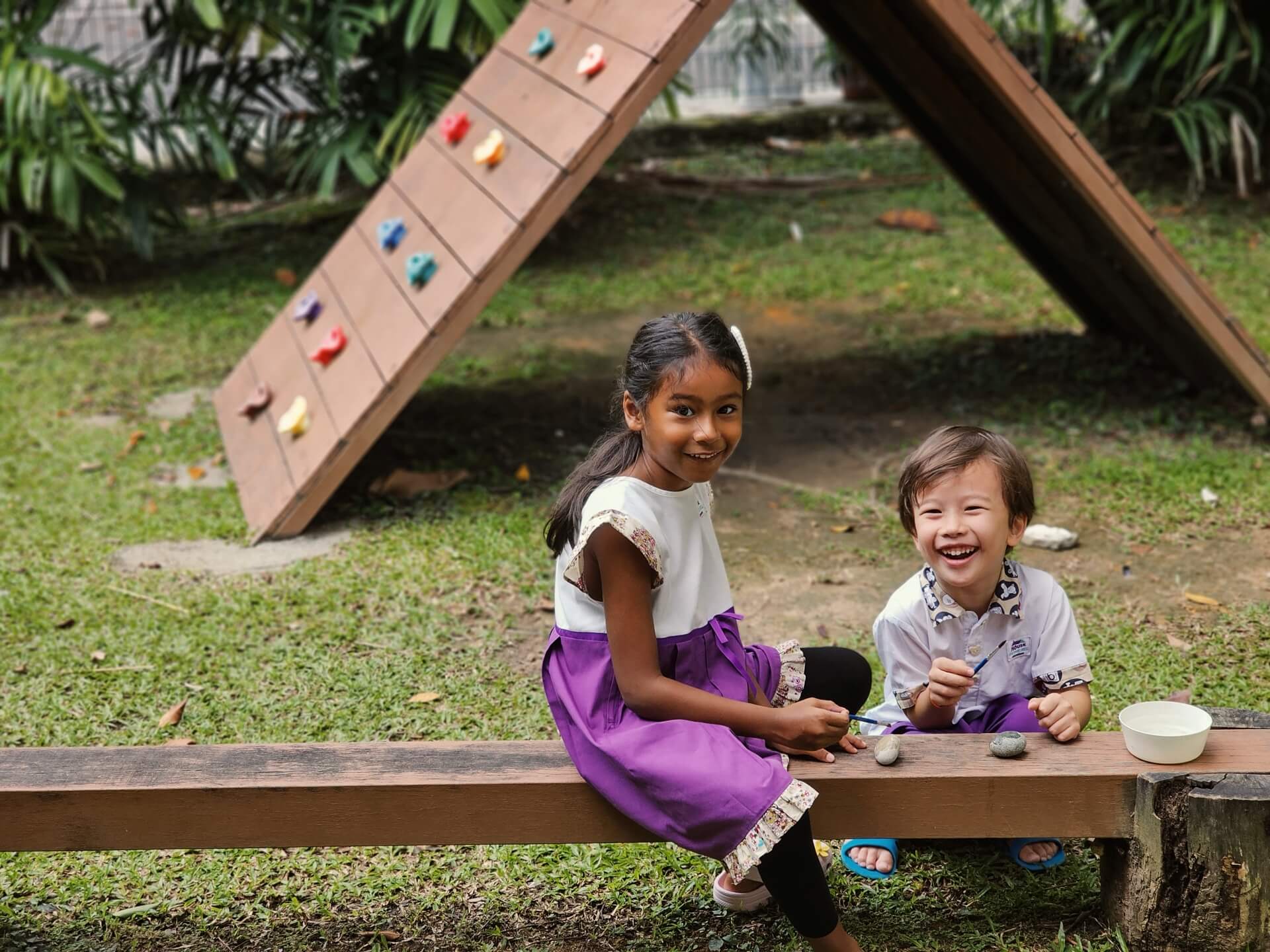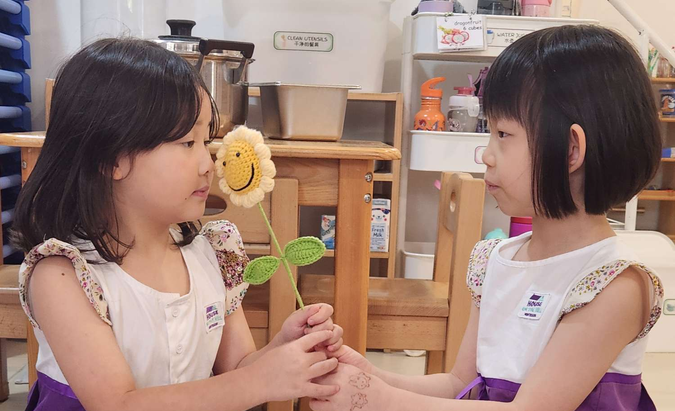










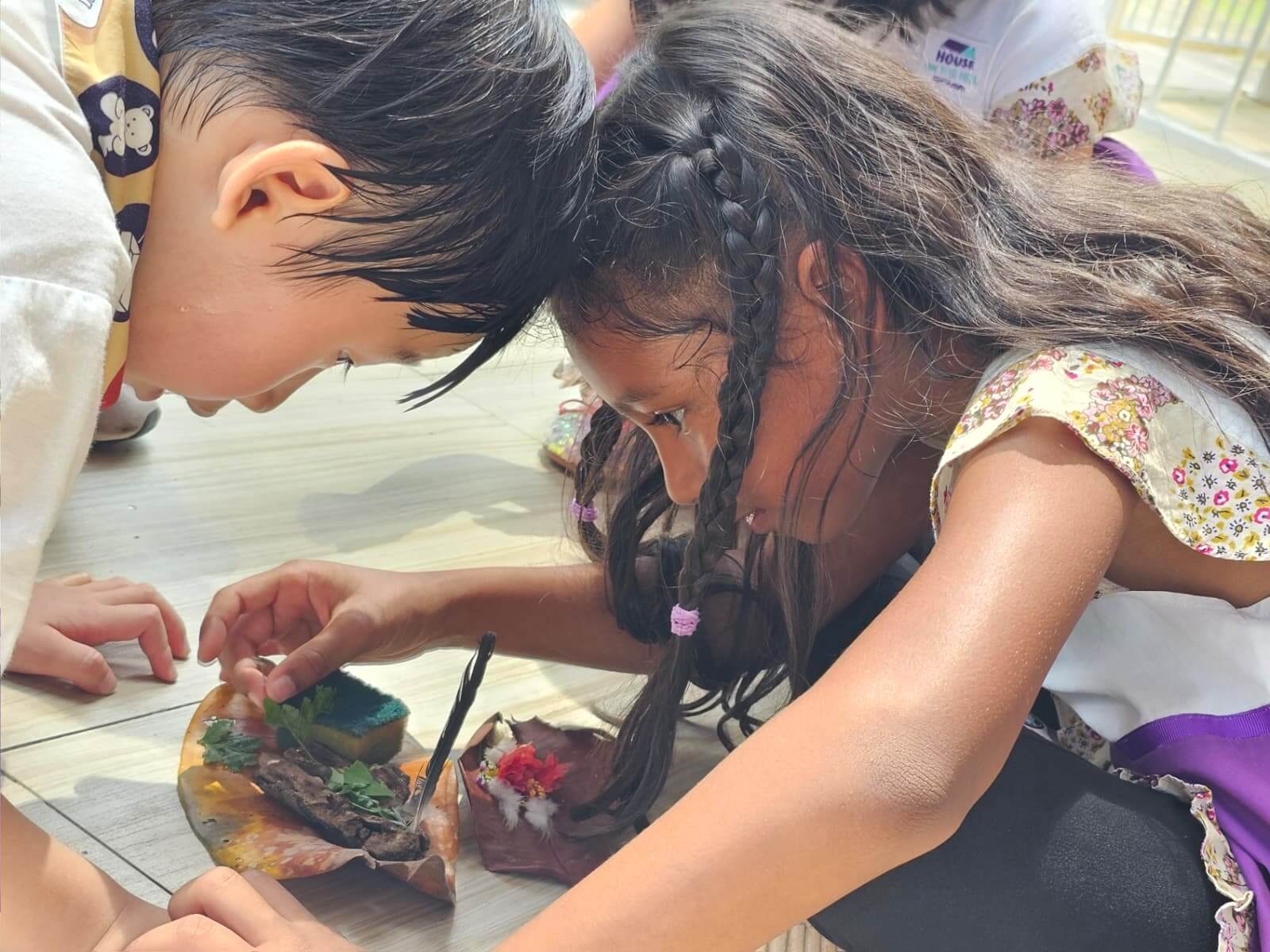
At House on the Hill Montessori, we believe that play is at the heart of every child’s learning journey. While it may appear simple and spontaneous, play is one of the most powerful tools children have to explore, understand, and connect with the world around them. It supports every area of development — physical, cognitive, social, and emotional — while nurturing curiosity, creativity, and confidence.
Play: The Work of the Child
In Montessori education, play and work are not opposites. The purposeful activities children engage in, like pouring water, building a tower, matching colours, and sweeping the floor. They are joyful acts of discovery. They are the child’s way of experimenting, testing, and mastering skills. In this sense, play is the “work of the child”: it allows children to make sense of their experiences through movement, repetition, and concentration.
Every time a child chooses an activity, focuses deeply, and repeats it, they are refining coordination, honing their problem-solving abilities, and cultivating independence. The joy that follows comes not from being entertained, but from a sense of achievement and self-mastery. This is what makes Montessori play purposeful and deeply meaningful.
Physical, Cognitive, Social and Emotional Growth
Through play, children develop holistically:
- Physically, they strengthen their motor skills and coordination. Whether carrying trays, climbing, or manipulating small objects, their bodies learn balance and control.
- Cognitively, play sharpens problem-solving and critical thinking. When children build, sort, or experiment, they test hypotheses and learn cause and effect.
- Socially and emotionally, play nurtures cooperation, empathy, and resilience. Children negotiate roles, take turns, and express themselves freely. At the same time, they also learn to manage frustration when navigating challenges and celebrating successes when overcoming difficulties
- Creatively, play encourages imagination and curiosity. By exploring freely and making independent choices, children grow confident in their own ideas.
When children play, they are not just keeping busy; they are learning how to think, how to connect, and how to care, not just for themselves, for others, as well as for their environment.
The Montessori Approach to Play
In the Montessori environment, play is guided by key principles that help children find purpose and joy in their activities.
- Freedom within limits: Children have the freedom to choose their work, move at their own pace, and repeat as often as they need. This autonomy builds concentration, discipline, and intrinsic motivation.
- A prepared environment: Everything in the classroom is designed for exploration. Materials are accessible, inviting, and carefully arranged to encourage independence and self-direction.
- Hands-on learning: Children learn best by doing. Activities involving movement, coordination, and manipulation of real objects make abstract concepts concrete.
- Mixed-age classrooms: Older children model and guide younger ones, fostering empathy, leadership, and collaboration, which are all natural outcomes of social play.
- Purposeful engagement: Montessori materials and activities are open-ended enough to allow discovery, yet structured enough to guide learning. Each experience is meaningful and builds toward a deeper understanding.
Montessori education recognises that while fantasy play has its place, real-life experiences form the most solid foundation for understanding. For young children, the world itself is magical as real-life exploration often satisfies their natural desire to imagine, test, and create.
How Play Supports Wellbeing
Play is also vital for emotional health. When children engage in meaningful activity, they experience calm, focus, and satisfaction. It reduces stress, allows for emotional release, and supports the development of self-regulation.
Confidence, curiosity, and creativity all flourish when children are trusted to play with purpose. As they take ownership of their learning, they grow more resilient, joyful, and motivated to explore further.
At House on the Hill, this approach is evident both indoors and outdoors. Our classrooms are filled with opportunities for discovery, while our outdoor environments allow children to climb, run, dig, and imagine. Whether planting seeds, washing vegetables, or building with natural materials, every experience strengthens both body and mind.

Supporting Play at Home
Parents play an important role in nurturing purposeful play. Here are some ways to create a Montessori-inspired environment at home:
- Provide simple, real materials: Choose items that are natural, safe, and small-sized for your child’s hands. Everyday household objects can be wonderful learning tools.
- Create order and accessibility: Keep toys and materials on low shelves so your child can choose and return them independently.
- Allow uninterrupted time: Children need long stretches of time to explore deeply. Avoid rushing play or constantly introducing new distractions.
- Observe, don’t direct: Step back and watch your child’s concentration unfold. Your observation helps you understand their interests and developmental needs.
- Encourage exploration: Offer opportunities for safe risk-taking. This involves both large movement-based skills like climbing and balancing, as well as fine motor skills tasks like pouring and sorting. Each challenge mastered builds confidence.
- Value real-life play: Cooking, gardening, cleaning, and sorting are all meaningful activities that strengthen skills and independence.
By offering space, time, and trust, parents help children develop the same confidence and joy that guide them in their Montessori classrooms.

The Joyful Work of Play
Play is not a distraction from learning. It is learning by itself. It is through play that children make connections, express creativity, and discover their place in the world. When we honour play as the child’s work, we nurture growth that is natural, joyful, and enduring.
At House on the Hill, every day we witness the power of play in action with lots of moments of laughter, focus, and wonder. By embracing play as essential, both at school and at home, we give our children the best gift of all: the freedom to learn with joy, curiosity, and purpose.
Find out more about our approach at https://houseonthehill.com.sg/education/our-curriculum/. Start your Montessori journey today!