









In early childhood education, mixed-aged classrooms — often a hallmark of the Montessori approach — offer more than just a learning environment. They are rich, living communities where children grow socially, emotionally, and intellectually.
At House on the Hill, we deeply believe in the power of such communities to nurture not just academic learners, but also empathetic, confident, and cooperative human beings.
What Is a Mixed-Aged Classroom?
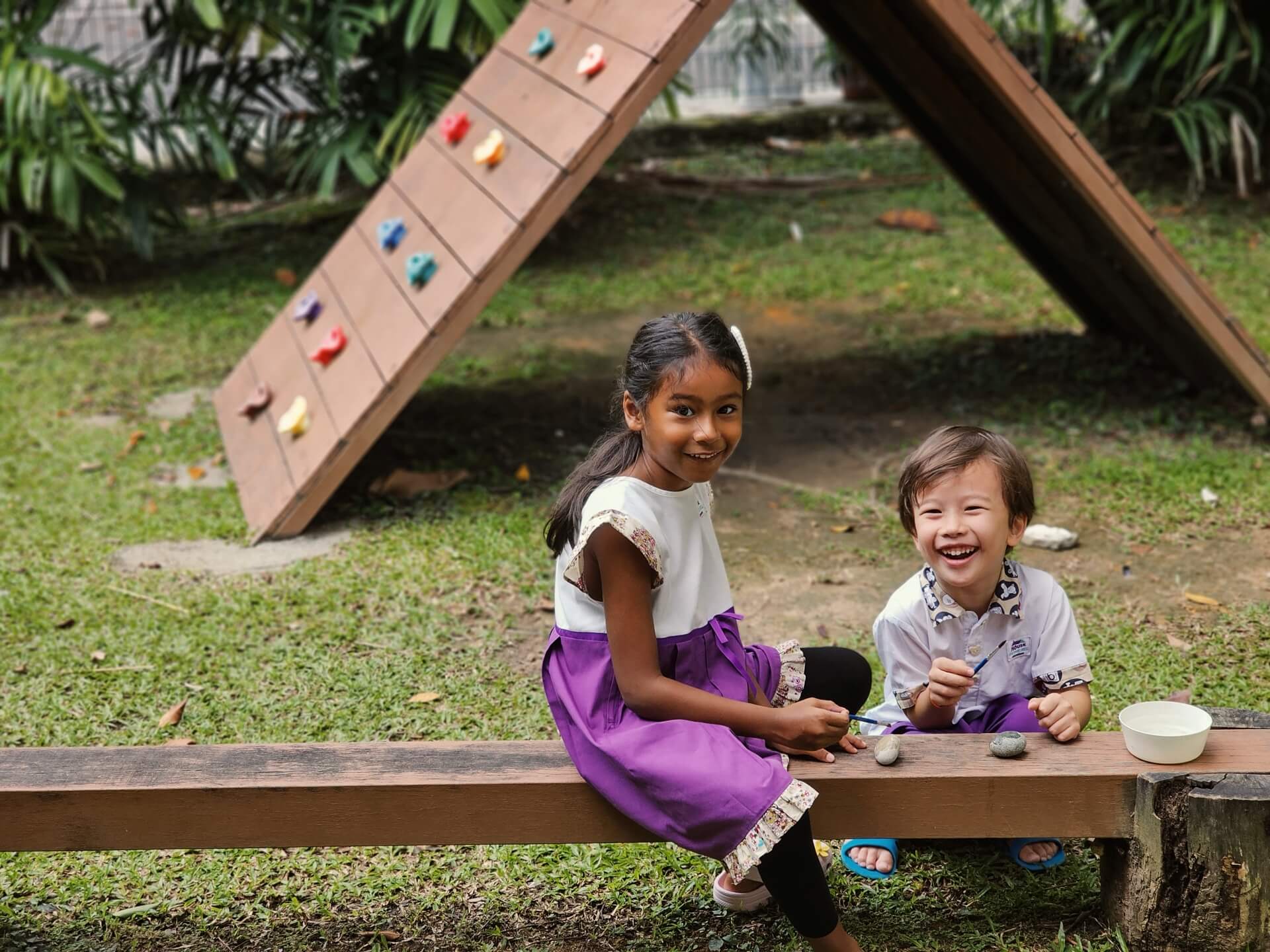
In Montessori-inspired settings, mixed-aged classrooms typically span a three-year age range (for example, 3–6 years old). Rather than being grouped strictly by age, children stay in the same environment over several years. This continuity enables natural relationships to form: older children mentor younger ones, and younger ones learn by observation and interaction.
Why Mixed Ages Matter for Social Skills

1. Peer Learning Builds Empathy and Leadership
One of the most powerful social-emotional advantages of mixed-age classrooms is peer learning. Older children naturally take on leadership roles: they guide, show, and teach their younger peers, not just academically but in daily routines and social norms. This process helps older children develop patience, responsibility, and empathy, as they scaffold tasks for those still learning. Younger children benefit too — by observing their peers, they absorb behaviours and social strategies, from how to share and negotiate to how to help and ask for help.
2. Conflict Resolution and Cooperation in Real Time
In a mixed-age environment, social challenges aren’t abstract lessons. Social interactions happen in a very natural setting where children learn to resolve disagreements, negotiate the use of materials, and share common spaces. In Montessori-aligned schools, these day-to-day interactions help develop negotiation, conflict resolution, and communication skills. Because the environment values cooperation over competition, children are encouraged to work together rather than compete against one another. This collaborative mindset is essential now, and as they grow and develop these social skills to navigate in more socially complex situations in the future
3. Emotional Maturity Through Role Modelling
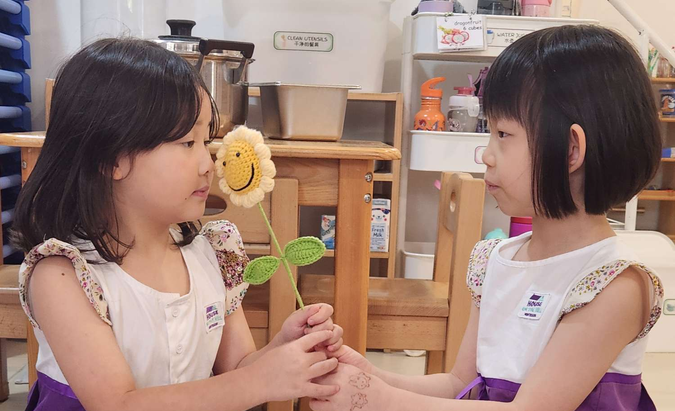
Younger children in mixed-age classrooms are naturally exposed to more emotionally mature peers. They see older children managing frustrations, showing kindness, or taking initiative, and they will also begin to observe and internalize these behaviours. Over time, this supports the development of emotional intelligence, helping children understand their own feelings and those of others. Interestingly, research suggests that in three-year mixed-age settings, children show more frequent positive peer interactions and even lower rates of loneliness and aggression compared to same-age classes.
4. Reduced Competition, Increased Confidence
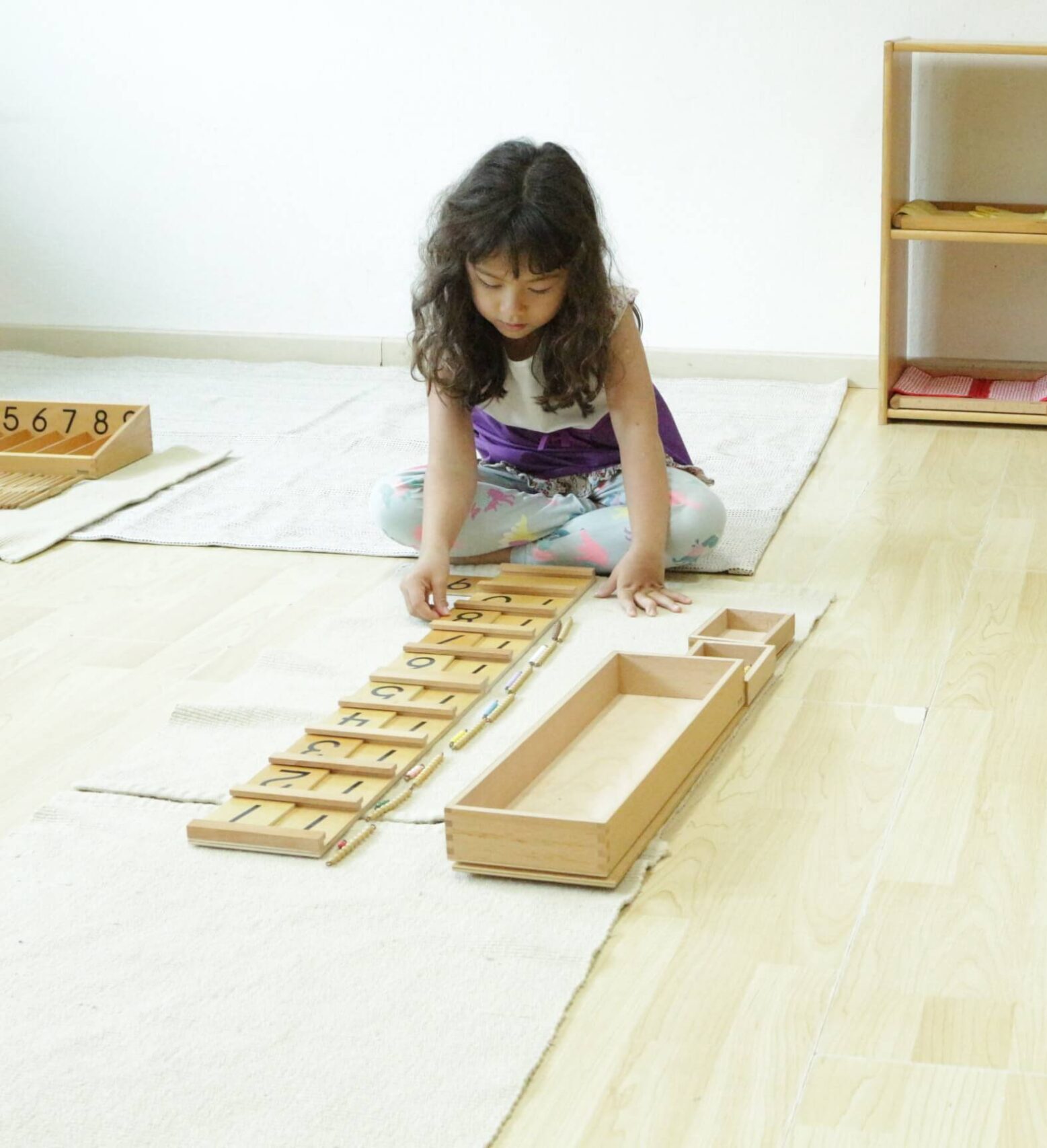
Traditional classrooms often revolve around age-based benchmarks and competition. But mixed-age Montessori classrooms emphasize individual pacing: children move at their own developmentally appropriate rhythm. This reduces the pressure to “keep up” or “be the best.” Instead, children cultivate confidence through mastery, helping others, and being part of a supportive community. Older children particularly benefit from mentoring peers; they reinforce their own understanding of concepts, gain self-esteem, and internalize leadership.
5. A Microcosm of Real-World Social Life
Mixed-age classrooms reflect real-life social structures more closely than age-homogeneous settings. In our workplaces, neighbourhoods, and families, we don’t only interact with people of our exact age — we engage across generations. Montessori educators often strongly believe that mixed-age groupings prepare children for this reality, nurturing adaptability, respect for others, and the capacity to form meaningful relationships with people at different stages of life.
Practical Tips for Parents: Supporting Social Growth at Home

Here are some ways parents can reinforce the social benefits of mixed-age learning, even outside school:
- Encourage mixed-age play by Arranging playdates with siblings, cousins, or friends of varying ages, allowing your child to experience peer mentoring and cooperation.
- Invite your child to teach: Whether it’s helping a younger sibling zip their jacket or explaining a game, giving your child the role of “teacher” is meaningful.
- Model empathy and patience: Use daily routines to demonstrate how to listen, wait for a turn, or ask for help.
- Talk about feelings: Reflect on emotions together. When an opportunity arises, invite your child to observe and talk about situations when someone was kind, or when there was a disagreement, and how everyone resolved it together.
Why This Matters in the House on the Hill Philosophy
At House on the Hill, we view education not just as academic preparation, but as the formation of character. Mixed-age classrooms align beautifully with this vision. They are not simply efficient pedagogical groupings; they are intentional communities to simulate real-world scenarios. Here, children learn more than letters and numbers: they learn to lead, to empathize, to negotiate, and to take responsibility. They grow in confidence and social understanding in an environment that mirrors the real world.
When you choose a mixed-aged classroom for your child, you’re investing in an ecosystem where every child has something to teach and something to learn. It is a place where social skills develop as organically as academic skills.
Discover more about our approach and book a tour today to experience our mixed-age classrooms firsthand!