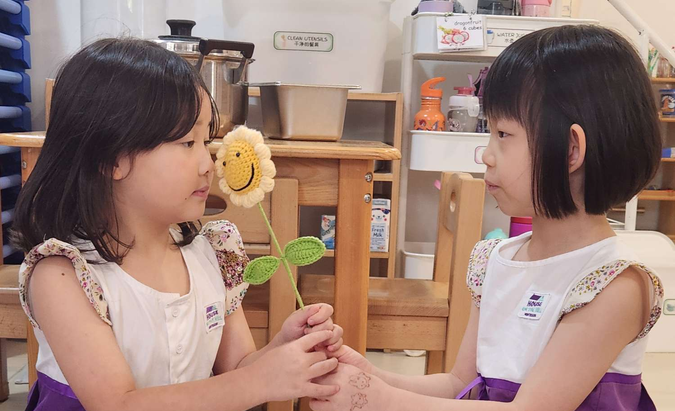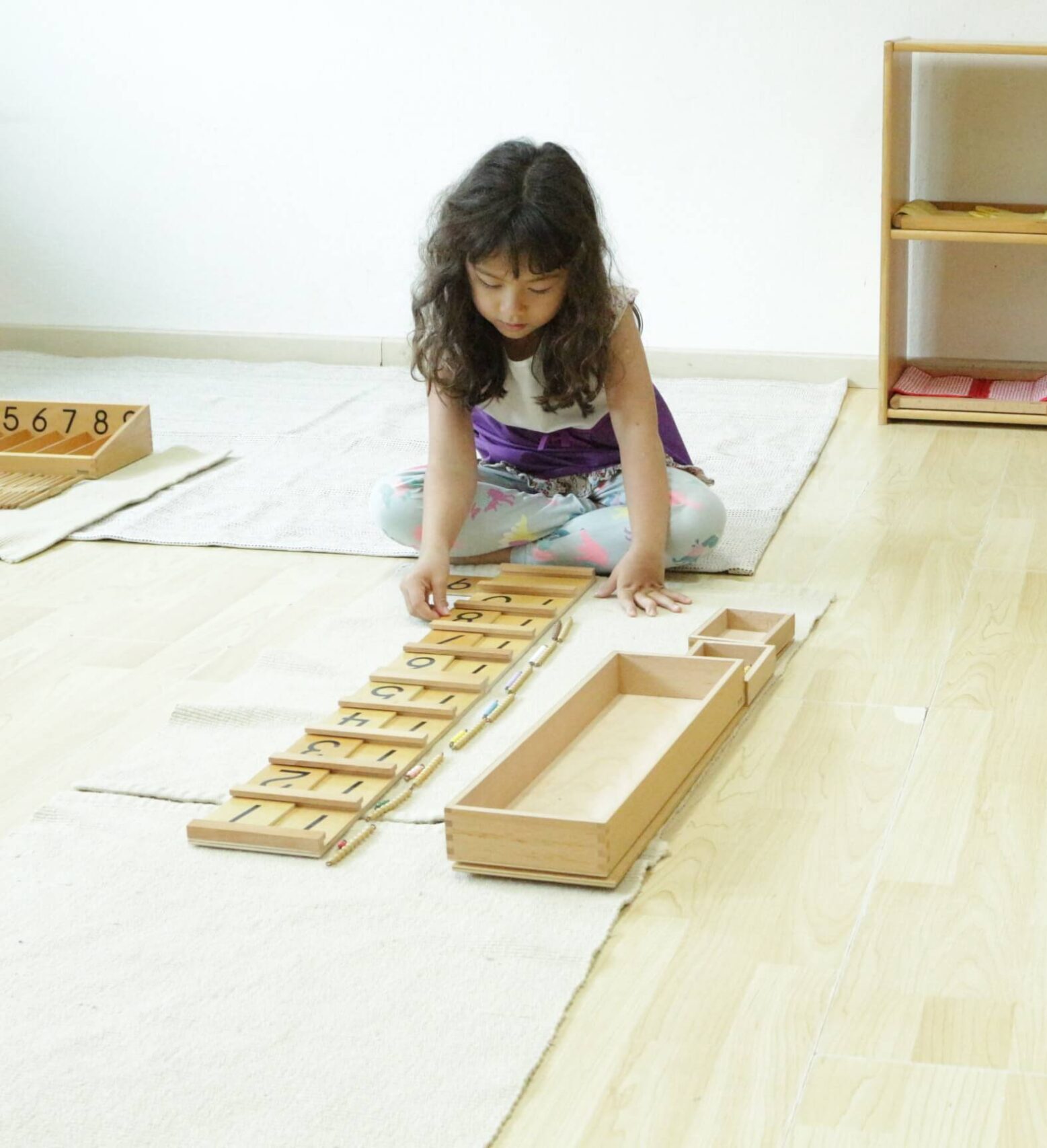










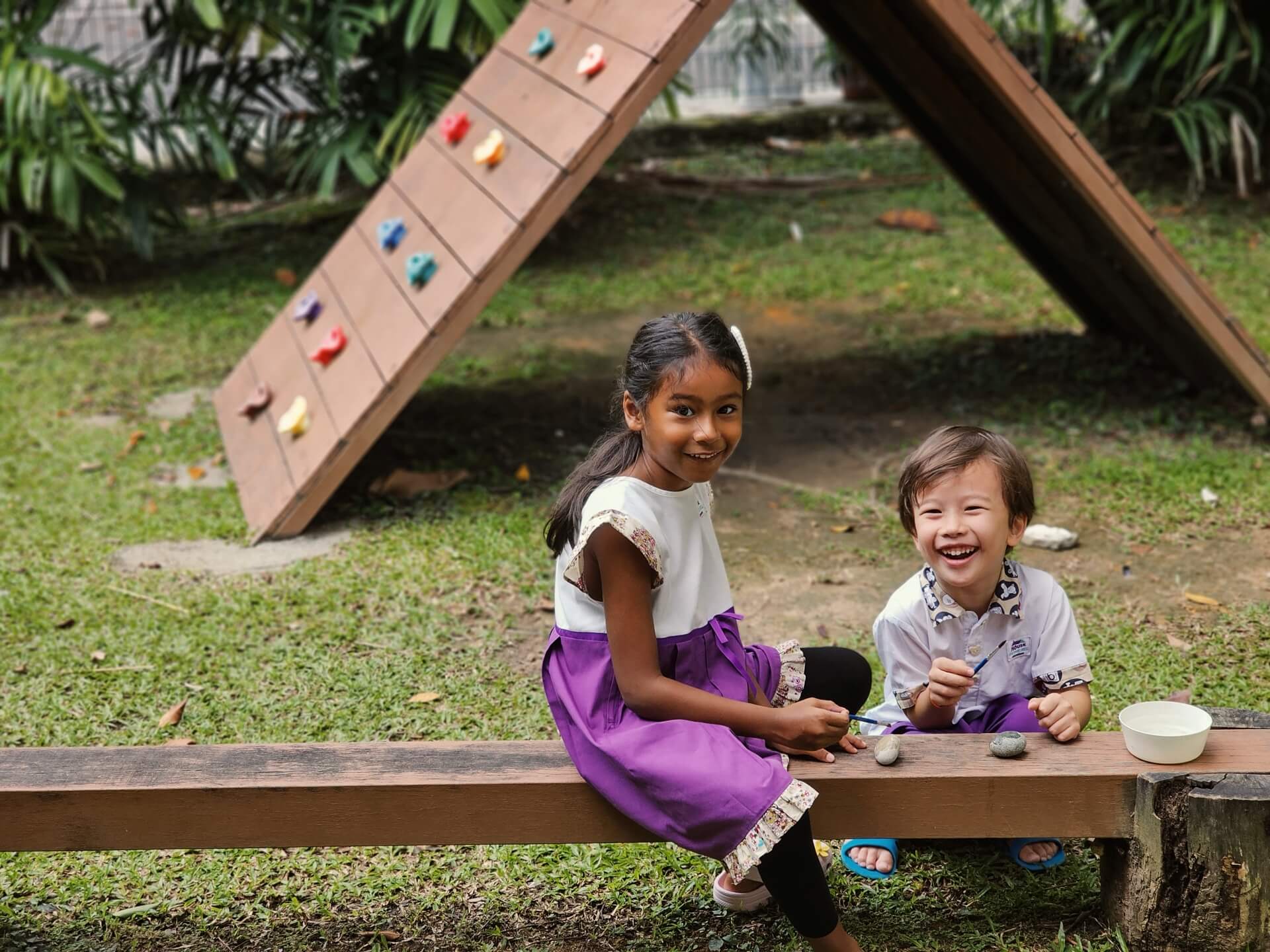
At House on the Hill, we believe that learning flows seamlessly between school and home. Your little artists have explored Mondrian’s grids, Pollock’s splatters, Picasso’s Cubist faces, Van Gogh’s sunflowers, and Kusama’s polka dots. And now, it’s time to bring creativity home in new, exciting ways.
These activities are designed to spark imagination, build fine motor skills, and nurture independence, all while staying true to Montessori principles of child-led exploration. Best of all, they’re different from what they did in school, so your child experiences fresh inspiration.
Nature Collage Inspired by Mondrian
What You Need:
- Leaves, petals, twigs, small stones
- A cardboard or paper base
- Glue or double-sided tape
Activity:
- Invite your child to sort natural items by colour or shape, echoing Mondrian’s love for primary colours and geometric simplicity.
- Arrange them into rectangles or squares on the base.
- Discuss colour, texture, and balance.
Montessori Touch: Encourage independence. Let your child collect, sort, and glue the materials themselves. This builds sensory awareness and coordination.

Action Painting with Natural Tools (Pollock Twist)
What You Need:
- Stick brushes, pinecones, feathers
- Water-based paint
- Large paper or cardboard
Activity:
- Instead of splattering with brushes, use natural tools to explore textures and motion.
- Drop, flick, or roll the items in paint to create patterns inspired by Pollock, but with new textures and marks.
Montessori Touch: Focus on process over product. Talk about how each tool leaves a different mark, enhancing observational skills.

Portraits with Found Objects (Picasso Twist)
What You Need:
- Recycled materials: bottle caps, buttons, scraps of fabric, paper
- Glue
- Optional: pencil or crayon for outlines
Activity:
- Encourage your child to make abstract portraits using only found objects.
- Mix and match shapes, colours, and textures, exploring Cubism in three dimensions.
Montessori Touch: This supports problem-solving and creativity, allowing the child to invent their own composition rather than following a template.
Sunflower Sensory Bottles (Van Gogh Inspired)
What You Need:
- Clear bottles or jars
- Yellow and green beans, rice, sand, or dried flower petals
- Funnel
Activity:
- Create a “sunflower jar” by layering colours and textures.
- Shake, roll, and observe patterns, highlighting the effects that look like swirling brush strokes in Van Gogh’s paintings.
Montessori Touch: Children explore cause-and-effect and visual sequencing while engaging their senses in a calm, self-directed activity.

Dot Mandalas (Kusama Twist)
What You Need:
- Circular cookie cutters or cups
- Dot markers or cotton buds with paint
- Paper
Activity:
- Instead of random polka dots, invite your child to create circular mandalas with dots.
- Experiment with symmetry, patterns, and gradients. This is an introduction to early math concepts like repetition and counting.
Montessori Touch: Child-led design fosters fine motor control, focus, and creativity. Discuss patterns and repetition, emphasizing observation over perfection.
Tips for Montessori Art at Home
- Prepare a Low, Accessible Art Space: Trays, baskets, and shelves, let your child choose what to use.
- Rotate Materials: Introduce new textures, colours, or natural materials weekly.
- Encourage Reflection: Ask your child about choices, colours, and feelings behind their work.
- Display and Celebrate: Create a home gallery with a rotating exhibit of their creations. This reinforces an appreciation of their own masterpieces and building their confidence.
Why This Matters
By exploring art differently at home, your child strengthens:
- Creativity & Imagination: New materials and techniques spark innovation.
- Sensory & Fine Motor Skills: Manipulating diverse objects supports physical development.
- Problem-Solving & Independence: Choosing materials and designing compositions fosters autonomy.
- Cultural Appreciation: Learning about artists and adapting their styles builds awareness and respect for creative expression.
Montessori learning isn’t confined to the classroom. It is a lifestyle and an opportunity to explore and recreate experiences. By introducing new, hands-on ways to explore art at home, you extend the joy, curiosity, and confidence your child has already discovered at school.
Find out more about our curriculum and hands-on approach by booking a tour and coming for a visit!