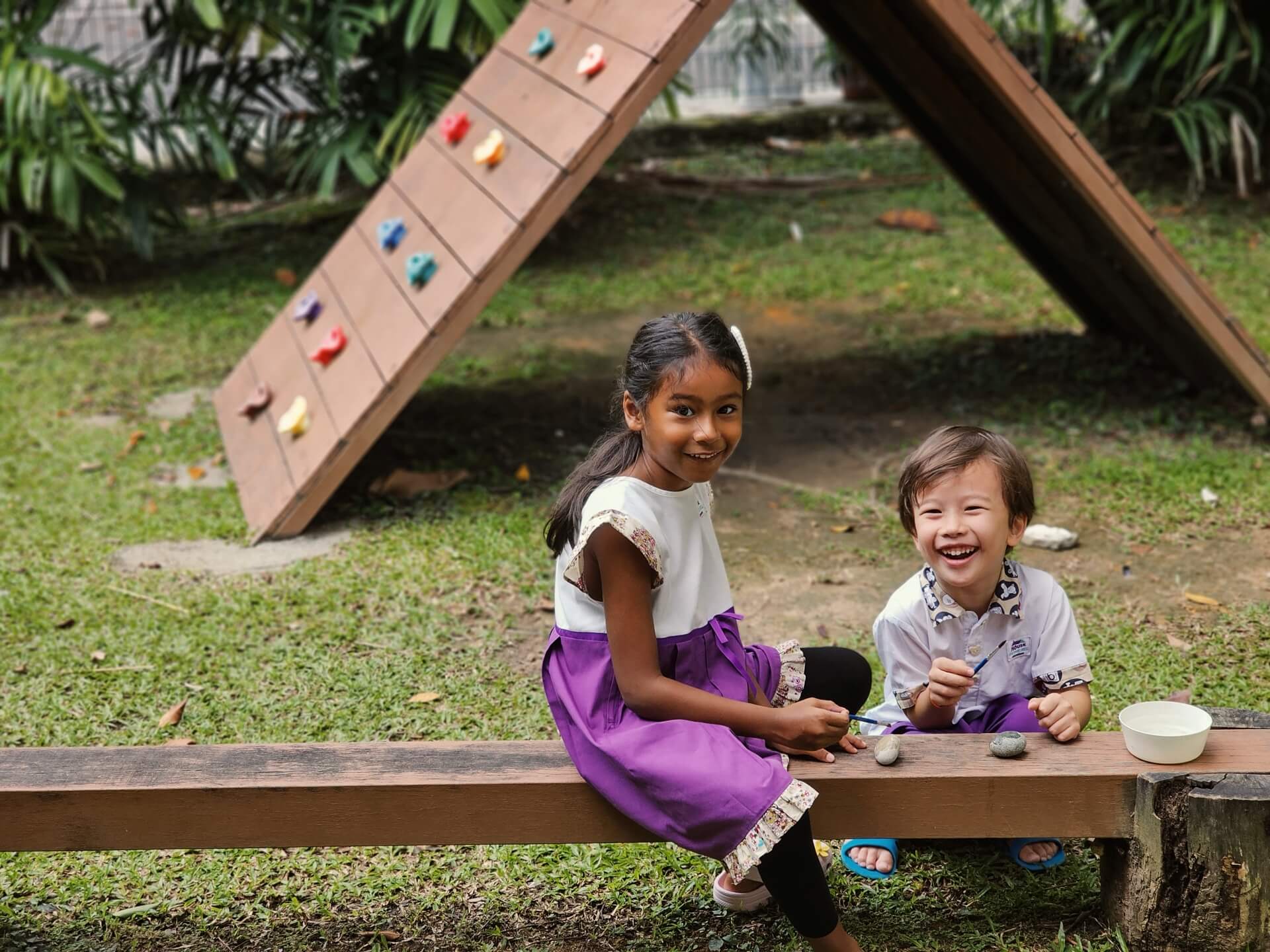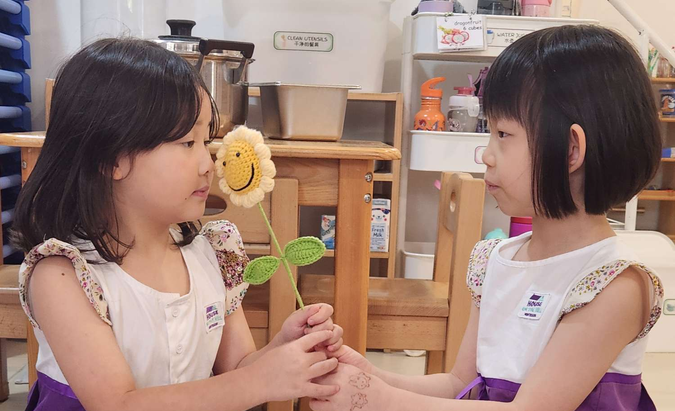











Children are natural scientists. Every time they pour, mix, build, and observe, they are testing ideas and discovering how the world works. At House on the Hill, our science activities are designed to nurture this sense of wonder — encouraging children to observe closely, think critically, and explore through hands-on experience.
Our classrooms follow thematic learning topics that help children make meaningful connections between what they learn and the world around them. Each theme — whether it’s about nature, transport vehicles, or even about the function of different parts of the human body — sparks curiosity and opens opportunities for exploration across different subjects. Through experiments, stories, and real-world experiences, children develop a deeper understanding of how things work as well as cultivate a lifelong love of learning.
Over the past term, our children have enjoyed a range of classroom science experiments — from colour separation to magnetism and even forces of motion. You can continue this spirit of discovery at home with simple, safe activities that invite curiosity and joyful learning.
Here are a few Montessori-inspired science experiences you can try together, grouped into categories that connect with your child’s senses and natural interests.
🧂 Everyday Chemistry
Simple experiments that let children see change in action — bubbles, fizz, and transformation!
1. Fizzy Lemon Volcano
Mix baking soda and lemon juice in a shallow dish and watch it fizz and bubble.
💡 Explores chemical reactions and gas production — a joyful sensory experience.
2. Floating Egg
Fill one glass with plain water and another with salt water. Drop an egg in each and observe what happens.
💡 Demonstrates density and buoyancy — the salt water helps the egg float.
3. Dancing Raisins
Place raisins in a glass of sparkling water. Bubbles cling to them and make them rise and fall.
💡 Shows how invisible gases can cause movement — a fun visual for young scientists.
🌀 Movement and Forces
Exploring how things move, roll, and fall — helping children understand motion and gravity through play.
4. Balloon Rocket
Thread a straw onto a string stretched across the room. Tape a balloon to the straw, blow it up, and let go!
💡 demonstrates how a thrust can cause an effect to make things move — air escaping pushes the balloon forward.
5. Feather and Coin Drop
Hold a feather and a coin at the same height and drop them. Which lands first? Try again using a paper tube to remove air resistance.
💡 Introduces gravity, air resistance, and the scientific process of predicting and testing.
6. Ramp Rolling
Use a piece of cardboard or a board as a ramp. Roll toy cars or balls down and change the incline.
💡 Explores speed, force, and friction — hands-on experimentation encourages critical thinking.
🌈 Sensory Science
Activities that engage the senses — seeing, touching, and noticing change through colour, texture, and movement.
7. Colour Mixing Magic
Line up three cups of coloured water (red, blue, yellow) and connect them with folded paper towels. Watch as the colours mix to create new ones.
💡 Shows absorption and colour blending — encourages observation and patience.
8. Melting Race
Place ice cubes on different surfaces — metal, wood, fabric, and plastic. Predict which will melt fastest.
💡 Explores heat and material properties, building awareness of temperature and change.
9. Evaporation Art
Mix salt and water and paint patterns on dark paper. Leave it to dry and observe the crystals left behind.
💡 Demonstrates evaporation and concentration — combines art and science beautifully.
🌿 Nature and Observation
Encouraging children to look closely at the natural world as well as things around them. By giving them a focus and aim, it aids them to notice that all things have specific patterns, textures, and characteristics that make them similar or different.
10. Magnetic Treasure Hunt
Give your child a magnet and invite them to find objects around the house that attract or repel.
💡 Introduces magnetism and classification, which encourages sorting and discovery.
11. Nature Detective Walk
Go for a short walk and collect leaves, stones, or flowers. Sort them by colour, shape, or texture.
💡 Develops observation skills and appreciation for nature’s diversity.
🌟 Bringing Montessori Science Home
Each of these simple activities helps your child explore scientific ideas through play, curiosity, and independence. This uses the Montessori method of hands-on learning.
When you experiment together, let your child lead. Ask open-ended questions:
- “What do you notice?”
- “What do you think will happen next?”
- “Why do you think it changed?”
The goal is not to get the right answer, but to build a love for learning. By observing, wondering, and discovering together, you’re helping your child grow into a confident, curious thinker — one discovery at a time.