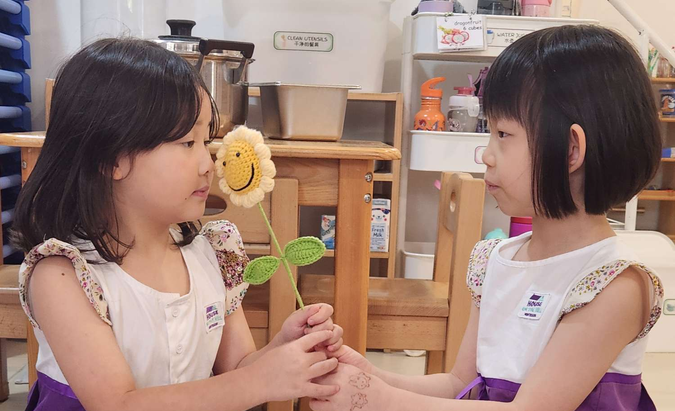











Speech development is an exciting and important part of your child’s early growth. But did you know that fine motor activities—like threading beads, pouring water, or tracing letters—can also support clear and confident speech? At House on the Hill, we combine Montessori principles with purposeful play to support language development in early childhood, including for children experiencing late speech development.

Why Fine Motor Skills Matter for Speech
Maria Montessori observed that children between birth and six years go through sensitive periods where they are especially receptive to learning. During this stage, children absorb language rapidly and refine their motor coordination.
Activities that strengthen the small muscles in their hands and fingers also support the coordination needed for speech. In other words, when we encourage children to explore with their hands, we are naturally building the foundations for clear articulation and expressive language.
Montessori Principles in Everyday Play
1. Prepared Environment
Children learn best in spaces where materials are accessible and engaging. Objects like sandpaper letters, story cards, and small manipulatives allow children to explore independently while practising language naturally.

2. Sensorial, Hands-On Learning
Touching, seeing, and moving help reinforce learning. Activities such as bead threading or sorting objects give them a chance to describe what they are doing, connecting fine motor movements with spoken language and vocabulary expansion.
3. Respect for the Child
Every child develops at their own pace. For some children, late speech development is part of their natural growth trajectory. Montessori classrooms provide patient, pressure-free opportunities for children to express themselves and grow in confidence.
4. Observation & Guided Intervention
Montessori teachers observe children closely, stepping in only when guidance is helpful. This might mean noticing when a child is struggling with certain words and offering the right activity, sound, or vocabulary at just the right time.

Making Speech Fun at Home
Parents play a vital role in reinforcing language at home. Try these simple Montessori-based activities:
- Interactive Play: Let them build, stack, or sort while naming colours, shapes, or objects.
- Storytelling: Use toys or props to act out stories.
- Reading Aloud: Ask your child to point, repeat, or describe what they see in books.
These simple interactions help nurture language literacy and early childhood education in everyday life.
At House on the Hill, we believe in a holistic approach to language development in early childhood. Our low student-to-teacher ratio ensures every child is observed, supported, and guided as an individual.
Whether your child is hitting early milestones or taking their time, we’re here to provide gentle support and work with parents to prepare them for confident communication in school and beyond.
Want to learn more? Explore our programmes, book a tour, or browse our Montessori at Home booklets for practical ideas to support speech development through hands-on learning.