









Parenting young children can sometimes feel like steering a small boat through unpredictable currents—especially when you encounter challenging behaviour in preschool. At House on the Hill, we believe these behaviours are not simply “problems” to fix, but crucial opportunities to guide children towards emotional regulation, resilience, and empathy.
By understanding the root cause, setting clear expectations, and applying consistent strategies, you can create a calmer, more harmonious environment at home and in school.
This blog offers practical, Montessori-aligned tips on responding to challenging behaviour, tailored for parents who value respect, independence, and whole-child development.
Recognising Challenging Behaviour
Before we can correct behaviour, we first need to understand what’s happening beneath the surface. In a Montessori setting, observation is key. We notice when a child is restless, frustrated or withdrawn, and we ask why.
In most instances, challenging behaviour stems from unmet needs such as fatigue, hunger, overstimulation, or a desire for autonomy. For example, a child who constantly interrupts may not be trying to disrupt the class, but may simply be eager to share or need reassurance. By taking time to identify the root cause, we can respond to challenging behaviour with empathy and effectiveness.

Responding to Challenging Behaviour
When a child acts out, our response should combine presence, reassurance, and gentle direction:
1. Root-Cause Inquiry
Ask yourself: Is the child tired? Is the task frustrating or too difficult? Montessori’s respect for the child emphasises understanding before reacting.
2. Clear, Calm Expectations
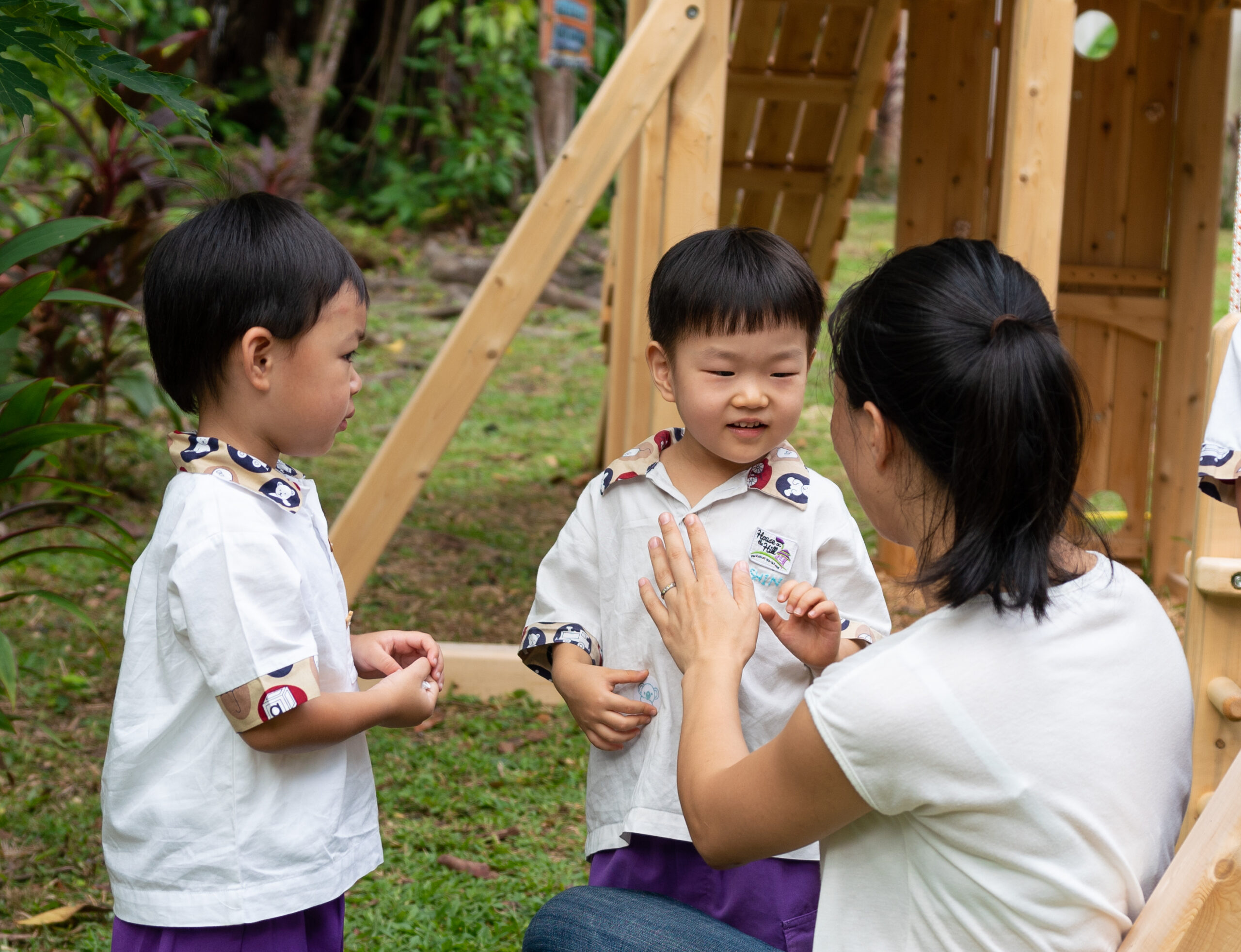
Use short, respectful phrases: “Please walk indoors” or “Use gentle hands.” This sets clear boundaries without shaming the child, creating a safe space for structured feedback.
3. Positive Reinforcement & Redirection
Rather than saying “Don’t run,” try “Let’s walk together.” If a child misuses blocks, invite them to build it with you. By focusing on what they can do, children feel capable and understood.
4. Conscious Discipline Calm-Down Strategies
Self-regulation is a learned skill. Support it with tools such as deep breathing, gentle stretching, and time in a calm corner. These strategies are not punishments, but tools children can use for life.

Preventing Challenging Behaviour
Montessori education places a strong emphasis on prevention through thoughtful routines and environments. The following strategies for navigating challenging behaviour in preschool help address issues before they arise:
- Choice Within Limits
Offer two acceptable options: “Would you like to read or draw?” This builds autonomy while maintaining boundaries. - Practical Life Activities
Tasks like pouring water, cleaning tables, or caring for plants channel energy into purposeful, calming movement, reducing moments caused by boredom or restlessness. - Prepared Environment
Set up spaces that encourage independence and minimise frustration. If a certain object often causes conflict, consider storing it until you deem the child is ready. - Mixed-Age Peer Learning
Allow older children to mentor younger ones. This fosters empathy and responsibility—natural antidotes to negative behaviour. - Predictable Routines
Give children warnings before transitions: “In two minutes, we’ll tidy up.” Consistency reduces anxiety and improves cooperation.

Example in Action
Scenario: A child pushes another during outdoor play.
Identify the Root Cause: They may be seeking attention or unsure about how to share the space.
Respond: “Our friends need space to play safely. Let’s walk over here together.”
Redirect: Suggest an alternative like invite them to play a group game or help set up a new activity.
Prevent: Incorporate more turn-taking games and teach conscious discipline calm-down strategies before active playtimes.
At House on the Hill, we see behaviour not as a “battle to win”, but as a developmental process. Through consistent boundaries, respectful communication, and empowering children with self-regulation tools, we help children build emotional resilience for life.
Whether it’s navigating big feelings, resolving conflict peacefully, or learning how to express needs clearly, our authentic Montessori environment provides the space and support every child needs to thrive. And we work closely with families to ensure that the values of empathy, respect, and independence continue at home.
If you’re interested in discovering how our proven approach helps manage challenging behaviour in preschools with confidence and care, we invite you to book a tour or explore the House on the Hill Montessori programmes.
Related articles:
https://houseonthehill.com.sg/how-to-handle-your-toddlers-challenging-behaviour/
https://houseonthehill.com.sg/understanding-big-behaviours-in-little-people/